Are you thinking about replacing your smartphone or just want to understand the criteria that really make a difference during a motorcycle trip?
We have prepared a complete guide to help you make the best choice. Screen brightness, GPS accuracy, resistance to rain and vibrations, battery life, performance, and robustness: we have reviewed all the criteria that matter when a phone is fixed to the handlebars for long hours.
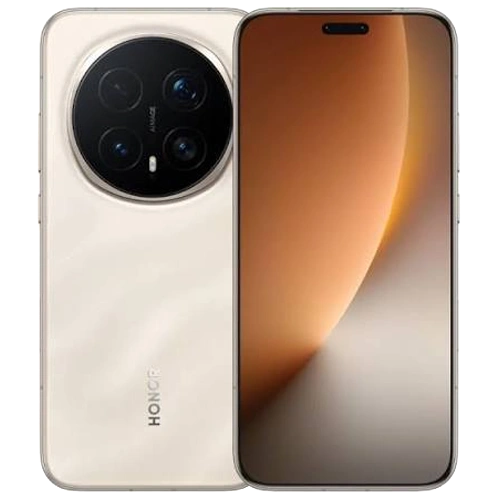
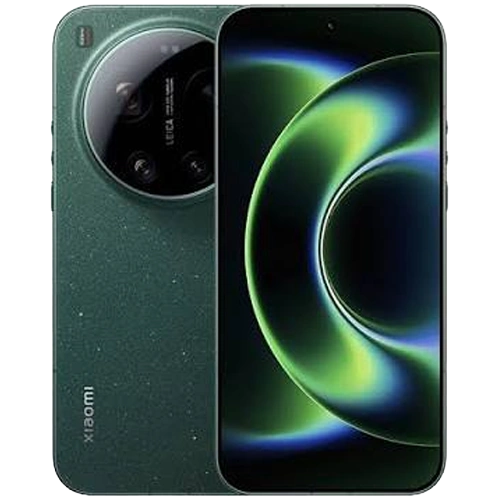
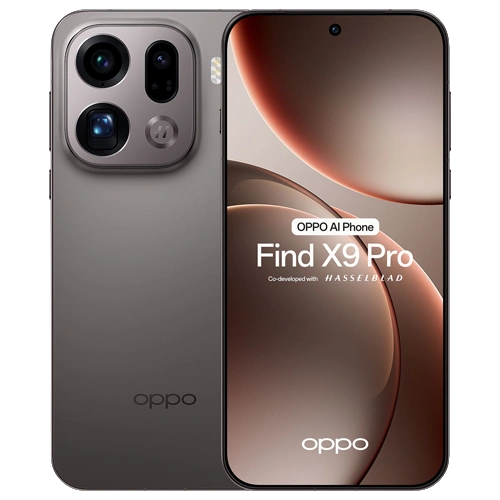
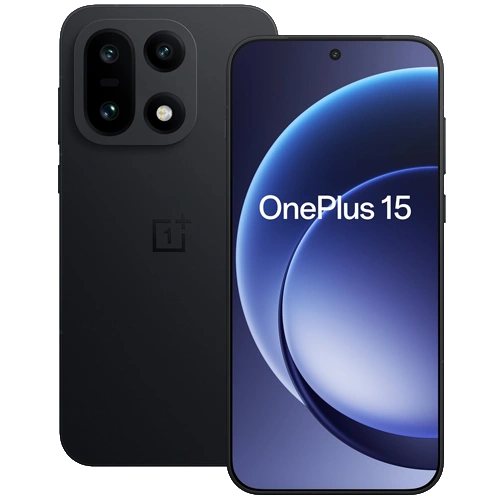
To carry out this comparison, we did an initial sort through most of the smartphones available on the market. We finally selected eight, as they are the ones that best meet, overall, the requirements of motorcycle use: the iPhone 17 Pro Max, the Google Pixel 10 Pro XL, the Motorola Edge 70 Pro, the Honor Magic8 Pro, the Oppo Find X9 Pro, the OnePlus 15, the Samsung Galaxy S26 Ultra, and the Xiaomi 17 Ultra.
Each model was evaluated according to 8 criteria: GPS accuracy, screen brightness, waterproofing, battery life, performance, robustness, operating system reliability, and repairability.
The scores assigned to GPS, brightness, performance, and the operating system count double in the final grade, as these elements have a direct influence on the quality and reliability of the guidance. Inaccurate GPS, an unreadable screen, a phone that overheats, or a system that cuts off the background application can quickly make navigation difficult, if not impossible.
Waterproofing, battery life, and robustness obviously remain important, but their limits can more easily be compensated for by external equipment: a charger installed on the bike, a reinforced case, a screen protector, a rain cover, or a remote screen compatible with Apple CarPlay or Android Auto.
As for repairability, it remains an important criterion, especially when it comes to easily finding a repair shop in the middle of a trip. However, it only becomes decisive in the event of a breakdown and has no direct influence on the quality of daily navigation.
This comparison is not sponsored. No manufacturer provided us with the devices or paid us to appear in this selection. We bought the eight smartphones with our own funds to test them in real conditions, and then we sold them at the end of the study.
GPS Accuracy and Stability
GPS accuracy is essential on a motorcycle, as an approximate position can quickly make guidance confusing. If the smartphone locates you on a parallel road, with a few meters of delay, or on the wrong side of an intersection, instructions may arrive too late or cause an unnecessary recalculation. On small roads, in city centers, deep valleys, or wooded areas, an accurate GPS makes it easier to follow the right route, anticipate direction changes, and avoid hesitation. For a rider, the goal is not just to know where they are, but to get a position stable and responsive enough for the map and directions to remain reliable throughout the journey.
The first criterion to consider is dual-frequency reception. Specifically, the smartphone uses two complementary satellite frequencies: the first determines your position, while the second helps correct certain atmospheric disturbances and better filters signals that bounce off buildings, cliffs, or terrain. This technology therefore improves the stability and accuracy of the guidance, especially in city centers, gorges, deep valleys, or heavily wooded areas.
The second criterion is antenna performance, which can be strongly influenced by how the phone is installed on the motorcycle. A case containing a metal plate, a poorly positioned magnetic mount, a low-quality wireless charger, or certain accessories placed too close to the smartphone can disrupt reception. To get the best signal possible, it is best to leave the top part of the phone as clear as possible.
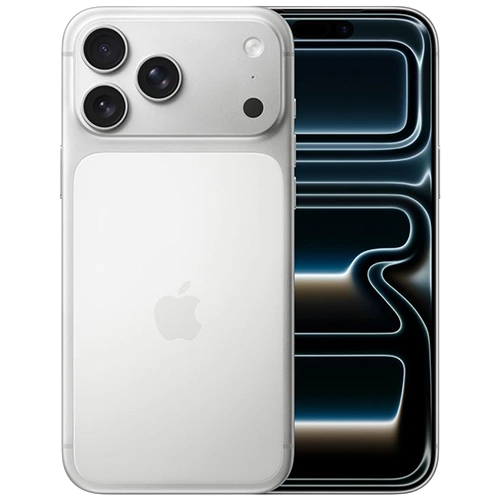
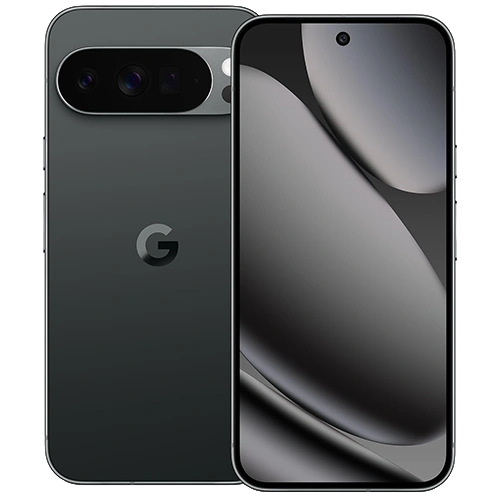
The Xiaomi 17 Ultra is probably the smartphone that currently packs the most complete GPS hardware. It is followed closely by the iPhone 17 Pro Max and the Google Pixel 10 Pro XL, which also feature particularly high-performance dual-frequency reception.
On the software side, however, the Pixel and iPhone maintain a significant advantage. Since their operating systems are developed directly by Google and Apple, location management is generally more consistent and reliable. The Xiaomi may offer more advanced GPS hardware on paper, but in practice, it will be less efficient.
- Xiaomi 17 Ultra
- Google Pixel 10 Pro XL
- iPhone 17 Pro Max
Readability in Sunlight
On a motorcycle, screen readability is essential. A smartphone can be very powerful but become almost unusable if the map disappears as soon as the sun hits the screen directly. Poor readability forces you to look away from the road more often, increases the risk of missing a turn, and makes guidance more tiring. For this use, real outdoor brightness counts much more than a simple spectacular figure announced on a spec sheet.
The brightness values communicated by manufacturers can be misleading. When a smartphone displays 4,000, 5,000, or 6,000 nits, it is often a peak reached for a few seconds, on a small part of the screen, and under very specific conditions. This does not mean that the entire map will remain that bright during several hours of navigation.
For motorcycle use, you mainly need to look at the brightness the screen can maintain outdoors. This is what determines if the map really stays readable in full sun. The iPhone 17 Pro Max and the Google Pixel 10 Pro XL are among the best in this field. The Honor Magic8 Pro and the Motorola Edge 70 Pro also offer excellent usable brightness for navigation.
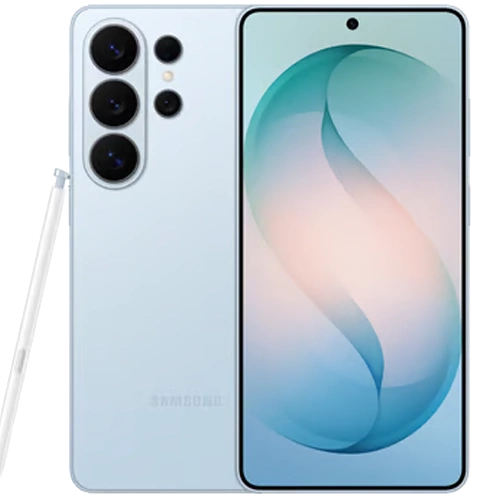
Readability also depends on reflections. A slightly less bright screen with a good anti-reflective coating can be more comfortable than a more powerful but very glossy screen. The Galaxy S26 Ultra particularly stands out on this point.
Finally, heat can significantly reduce brightness. In full sun, with GPS, mobile data, and charging active, the phone may automatically dim its screen to avoid overheating. High and stable brightness is therefore much more useful than a spectacular but very brief peak.
- iPhone 17 Pro Max
- Google Pixel 10 Pro XL
- Samsung Galaxy S26 Ultra

Performance and Thermal Management
A navigation app doesn’t need the most powerful processor on the market. It mainly needs to stay fluid for several hours, recalculate a route quickly, maintain a stable Bluetooth connection, and continue to function correctly despite the heat. All the smartphones presented in this comparison have more than enough power for guidance. Even a more affordable model like the Motorola Edge 70 Pro will run a navigation app without difficulty. It might just be a bit slower during a complex recalculation, especially if several apps are active simultaneously.
The real point of concern is temperature. When a smartphone overheats, it can automatically reduce screen brightness, slow down its processor, limit or stop charging, consume more power, and in some cases, display an alert or temporarily suspend certain functions. On a motorcycle, this risk is heightened by direct sun, high screen brightness, permanent GPS use, and potential simultaneous charging.
The iPhone 17 Pro Max stands out thanks to a more advanced thermal architecture integrating a vapor chamber. This distributes heat more effectively within the casing and allows the phone to maintain good performance during prolonged use. This thermal control also helps maintain brightness and charging for longer, while preserving excellent battery life. It is therefore the most reassuring choice for long days of navigation.
The Samsung Galaxy S26 Ultra also features a completely redesigned vapor chamber. Independent tests show that it stays relatively cool on the surface, even under heavy load. In return, it more noticeably reduces its processor power when the effort is prolonged. For a navigation app, this remains minor: the phone keeps more than enough power while prioritizing a reasonable temperature and good stability.
The Xiaomi 17 Ultra uses a dual-channel cooling system based on a large vapor chamber. During prolonged tests, it can also reduce its performance, like almost all high-end smartphones, but this drop remains relatively moderate. It therefore maintains high power over time, placing it among the best models for demanding uses. However, it can get warmer than the Samsung, which prioritizes controlling its external temperature more.
- iPhone 17 Pro Max
- Samsung Galaxy S26 Ultra
- Xiaomi 17 Ultra

Operating System (OS)
The operating system plays an essential role during navigation, even if it is rarely highlighted on spec sheets. On a motorcycle, an app must stay active for several hours, continue to receive GPS position, maintain the Bluetooth connection, and display instructions without being interrupted. If the system tries to save battery too aggressively, it may limit the background app, delay location, or in some cases, cut off the guidance.
With iOS, operation is generally consistent from one iPhone to another. Apple controls both the phone and its operating system, which facilitates background location management and limits behavioral differences between models. Certain permissions must still be correctly set, but the procedures remain relatively simple and constant.
Pure Android, found mainly on Google Pixels, also offers clear and predictable operation. Android naturally integrates mechanisms intended to save battery, but it allows you to easily authorize a navigation app to run without restriction. Since the system is not heavily modified by the manufacturer, settings are generally easier to find and the risks of unexpected closures are reduced.
On Android smartphones with a manufacturer skin, configuration is much more complex. Samsung, Xiaomi, Honor, Oppo, and OnePlus add their own energy-saving mechanisms to those already integrated into Android. These devices can work perfectly with a navigation app, but they require several settings to allow background operation, disable certain battery restrictions, and avoid interrupting the guidance.
Furthermore, these settings must be checked after every major system update, as some permissions may be modified or reset. Among the brands using a skin, Motorola is the only one to offer a lightweight interface and simple settings.
- iPhone 17 Pro Max
- Google Pixel 10 Pro XL
- Motorola Edge 70 Pro
Waterproofing and Use in the Rain
On a motorcycle, the level of waterproofing needed depends mainly on the smartphone’s actual exposure.
On a machine equipped with a windscreen that correctly protects the phone from direct spray, an IP68 certification is more than enough in most situations. It guarantees protection against dust and limited immersion. The iPhone 17 Pro and the Google Pixel 10 Pro XL both benefit from this certification and are therefore perfectly suitable for use behind a windscreen.
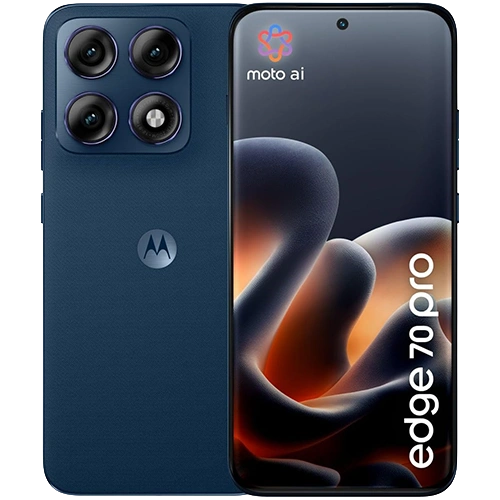
On a motorcycle without a windscreen, the constraint is greater. At high speeds, rain hits the smartphone directly like a continuous jet. It then becomes preferable to choose a device certified IP69, which is tested against powerful sprays. The Motorola Edge 70 Pro combines IP68 and IP69 ratings. They have also been designed to better resist shocks, vibrations, and difficult conditions, making them particularly suitable for an exposed installation on a motorcycle. The OnePlus 15 also offers an excellent level of protection against water.
You also need to check that the screen remains usable in the rain. Water Touch, Aqua Touch, or equivalent technologies limit unintended commands caused by drops. Motorola notably offers this function on the Edge 70 range, while OnePlus uses its Aqua Touch technology.
The Honor Magic8 Pro is also among the best-protected models in this comparison. It combines IP68, IP69, and IP69K certifications, covering both immersion and powerful water jets. This particularly complete protection makes it very reassuring on a motorcycle without a windscreen, where the phone remains directly exposed to the rain.
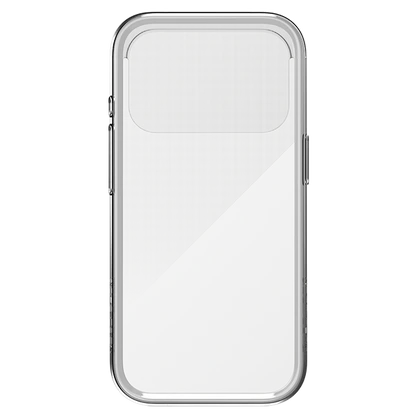
Some mounts also allow for the addition of a rain cover. This solution is an excellent compromise for effectively protecting the smartphone when it starts to rain. Since the cover can slightly increase reflections, reduce touch sensitivity, or promote heating, it’s better to only install it when it rains. You then just need to stop for a few moments in a safe place to put it on before hitting the road again.
For riders with a larger budget, a dedicated screen compatible with Apple CarPlay or Android Auto is an even more comfortable solution. The smartphone can stay safe in a pocket or bag, while the screen fixed to the bike handles the guidance display. We will return to this solution in more detail in a future article.
- Motorola Edge 70 Pro
- Honor Magic8 Pro
- OnePlus 15
Battery Life
On a motorcycle, battery life becomes an essential criterion as soon as you don’t have a charger on the machine. It is also important in the rain, as it is not recommended to plug in a cable when the phone’s connector is wet. In these situations, the smartphone must be able to provide several hours of guidance without risking turning off before the end of the stage.
Battery capacity, expressed in mAh, gives an initial indication, but it is not enough to predict real battery life. A large screen used at high brightness consumes a lot of energy, as do GPS, mobile data, Bluetooth, voice guidance, and route recalculations.
New silicon-carbon batteries now allow for excellent battery life without systematically making smartphones too heavy or too thick. The Oppo Find X9 Pro and the OnePlus 15 are among the most enduring models and can easily handle a long day of navigation, or even more depending on use.
The Motorola Edge 70 Pro also offers very good battery life, while maintaining a reasonable weight and particularly fast charging.
The iPhone 17 Pro Max doesn’t have the largest battery, but it compensates with excellent energy efficiency and is among the most enduring models in the comparison.
For other smartphones, it is strongly recommended to equip the motorcycle with a charger to avoid any unpleasant surprises on the road. Since a motorcycle charger is simple to install and inexpensive, its price is generally not a real barrier. It is therefore a very useful small investment for peace of mind, provided, of course, that you don’t plug in the phone when the connector is wet.
Even on a motorcycle equipped with a power supply, battery size remains useful: it limits charging periods and therefore heat production. The best scenario often consists of charging intermittently rather than keeping the phone constantly at 100%, especially under the sun.
- Oppo Find X9 Pro
- OnePlus 15
- Motorola Edge 70 Pro

Robustness in Case of a Drop
On a motorcycle, smartphone protection is mainly important during handling while stopped, when the device can slip from your hands or fall from the mount onto the asphalt. In the event of a crash while riding, the phone usually becomes a very secondary concern. The goal is therefore primarily to prevent a clumsy move, a poor mount lock, or a small low-speed drop from turning the screen into a puzzle.
First, it must be remembered that the IP68 rating does not protect against shocks. A smartphone can perfectly resist water and shatter upon its first encounter with the ground. Two solutions are then possible: protect a classic phone with suitable accessories or choose a reinforced model directly.
The first option is often the most balanced. A shock-absorbing case, thick enough on the corners and slightly raised around the screen, significantly improves resistance without making the device too heavy. It is also recommended to add a protective glass or film to limit the risk of scratches or screen breakage. Finally, a safety lanyard is strongly recommended. It should be attached directly to the motorcycle, independently of the mount, to hold the phone if it comes loose.
Some classic models already offer good resistance. The Motorola Edge 70 Pro and the Honor Magic 8 Pro, for example, are designed to better withstand shocks, vibrations, and difficult conditions.
- Motorola Edge 70 Pro
- Honor Magic8 Pro
- All other models
Repairability
Repairability is a criterion often overlooked when choosing a smartphone, but it becomes very important when traveling by motorcycle. A broken screen, a damaged charging port, or a failing battery can quickly complicate the rest of the trip. In this context, the most important thing is not just knowing if the phone can be repaired, but also determining if it can be done quickly, near where you are, and without being out of commission for several days.
The most common repairs concern the screen, the battery, and the charging port. It is therefore preferable to choose a brand with an extensive network of authorized centers or partner repair shops. Spare parts must also be widely enough distributed to avoid a simple intervention being delayed by several days of waiting.
On this point, Apple and Samsung are the most reassuring brands. Apple allows you to have an iPhone repaired in its stores or in many authorized centers, with original parts and trained technicians. Samsung has more than 70 authorized centers in France, in addition to its stores and partners. This presence facilitates quick repairs when you are far from home.
Google also offers an interesting solution for Pixels, even if its physical repair network is still less extensive than those of Apple or Samsung. However, coverage is improving rapidly thanks to the development of partnerships with authorized repairers like WeFix. In covered areas, it becomes possible to have a screen, battery, or certain components replaced without systematically sending the phone back to the manufacturer.
For other brands, the situation is much more hit-or-miss. Honor, OnePlus, Xiaomi, Oppo, and Motorola do have repair solutions, but the presence of authorized centers, availability of parts, and intervention times vary greatly depending on the region and the model concerned. A local repair is sometimes possible, but it depends more on the network of independent repairers and their ability to quickly obtain the right parts.
- iPhone 17 Pro Max
- Samsung Galaxy S26 Ultra
- Google Pixel 10 Pro XL
What About the Prices?
Price remains, of course, an important criterion. However, it is difficult to find a smartphone truly suitable for intensive motorcycle use for less than €700. Entry-level and mid-range models are perfectly fine for daily use, but their limits in terms of GPS accuracy, brightness, heat management, battery life, or background operation can quickly disrupt guidance, or even make it unusable.
If you do not want to or cannot invest in a recent high-end model, it is better to avoid entry-level or mid-range smartphones and prioritize one of the following solutions:
- Choose an older model in the same range. Even if it’s one or two generations old, it will retain a better screen, more accurate GPS, better performance, and a design more suited to demanding use than entry-level and mid-range smartphones.
- Buy used: a premium used smartphone will always do the job better on a motorcycle than a new entry-level or mid-range model sold at the same price.
- Finance your purchase. Many manufacturers and retailers allow you to spread the payment over several months, sometimes without fees, while operators often offer the smartphone with a monthly payment associated with the plan. This option makes a high-end model more accessible.
- And don’t hesitate to combine all three if needed 😊
As an example, it is possible to find a refurbished and guaranteed iPhone 16 Pro starting from around €750 on Back Market, which is twice as cheap as the iPhone 17 Pro Max presented in this comparison. Similarly, a new Motorola Edge 60 Pro can be found for around €400 new on Amazon, making it a particularly interesting alternative for reducing the budget without giving up a smartphone well-suited for motorcycle navigation.
In Summary
In Conclusion
Even if the iPhone and Pixel maintain a slight lead, mainly thanks to the simplicity and consistency of their operating system, all the models in this comparison are neck and neck. Differences exist, but they remain limited enough that none of these smartphones is a bad choice. All are perfectly suited for intensive motorcycle use and offer the performance necessary to ensure reliable, fluid, and readable guidance in most conditions.
If you already use a brand present in this comparison and its environment suits you, it’s not necessarily useful to change. Your knowledge of the interface, your usage habits, as well as compatibility with your existing accessories, apps, and services can legitimately guide your choice. Staying loyal to a brand you’ve mastered will also save you an adaptation period, without compromising on the quality of motorcycle guidance.
On the other hand, if you have no particular preference for a brand or an operating system, the iPhone, the Pixel, and the Motorola Edge Pro appear to be the three most relevant choices in this comparison.
TheiPhone Pro Max is probably the most complete and highest-performing smartphone in this comparison for motorcycle use. It combines highly accurate GPS positioning, a screen that remains particularly easy to read in direct sunlight, excellent battery life, effective heat management, and high performance. Its stable and well-optimized operating system also helps prevent unpleasant surprises while navigating, while Apple’s extensive repair network makes it easier to get support if needed during a road trip. Its main drawback remains its high price, ranging from 800 and 1 500 € depending on the version and how it is purchased. You should also budget around €100 more to equip it properly with a quality mount, a reinforced case, a screen protector, and a rain cover. This significant investment is nevertheless offset by its long lifespan and higher resale value than its competitors, making it a relevant choice in the long term.
Almost as high-performing and complete as the iPhone Pro Max, the Pixel Pro XL stands out with a more accessible price, generally between €600 and €1,000 depending on the version and purchase method. It thus constitutes a particularly relevant option for those looking for a high-end smartphone perfectly suited for motorcycle navigation. As with the iPhone, you will need to budget about €100 extra to equip it correctly with a quality mount, a reinforced case, a screen protector, and a rain cover.
The biggest surprise in this comparison is probably the Motorola Edge Pro. Priced between €400 and €700 depending on the version and how it is purchased — new, refurbished, or second-hand — it delivers consistently strong performance across all the criteria that matter for motorcycle use. Its GPS positioning is accurate, its screen remains readable outdoors, its battery life is very comfortable, and its lightweight interface keeps complex settings to a minimum. Above all, it stands out for its true adventurous spirit.Its generous battery, good resistance to drops, and high level of protection against rain make it a particularly reassuring smartphone for long road trips and challenging conditions. Unlike the iPhone and Pixel, it also requires fewer protective accessories, further reducing the overall cost of the setup. Without necessarily being the best in every category, it performs well across the board, with no real weaknesses. It is probably the most well-balanced option in this comparison and, without a doubt, the one that offers the best value for money..
Bonus: Mounting Systems
As we have mentioned throughout this comparison, if you choose a smartphone whose waterproofing or robustness remains limited, it is almost indispensable to equip it with a reinforced case and rain protection.
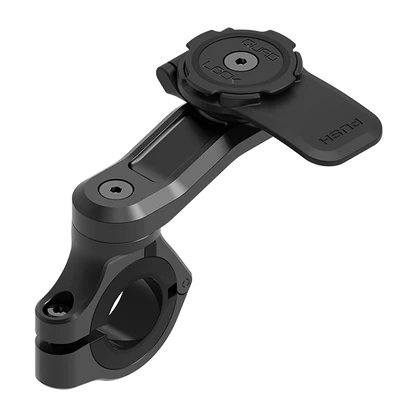
At 68°, we all use Quad Lock mounts. This choice is not linked to any partnership: we bought our equipment ourselves and have, to date, encountered no problems. There are probably other interesting solutions on the market, and we may dedicate a specific comparison to them. For now, Quad Lock remains, in our opinion, one of the most complete solutions for correctly fixing and protecting a smartphone on motorcycle handlebars.
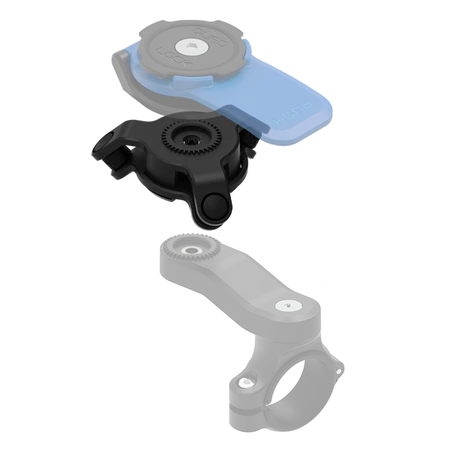
The minimum equipment includes the mount suitable for your machine as well as the vibration dampener. While the mount seems obvious, many riders still neglect this dampener, at the risk of gradually damaging certain phone components, especially the camera stabilizer.
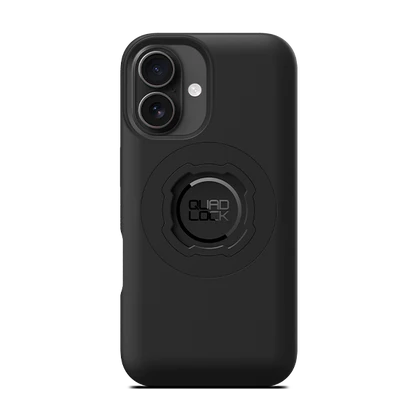
For iPhones, Google Pixels, and several Samsung models, it’s also possible to add a dedicated case and rain protection. This provides a particularly comprehensive setup, combining solid mounting, vibration reduction, shock protection, and improved weather resistance.
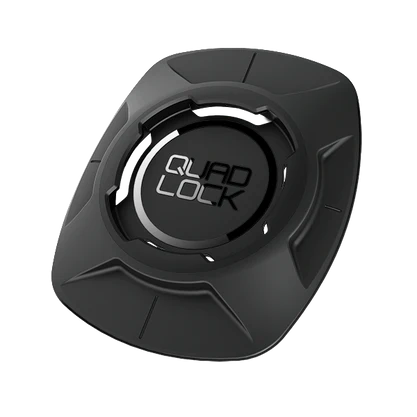
For smartphones already well-protected against water and shocks, such as Motorola Edge Pro models, a universal adapter is sufficient. You can forgo a dedicated case or additional rain protection.